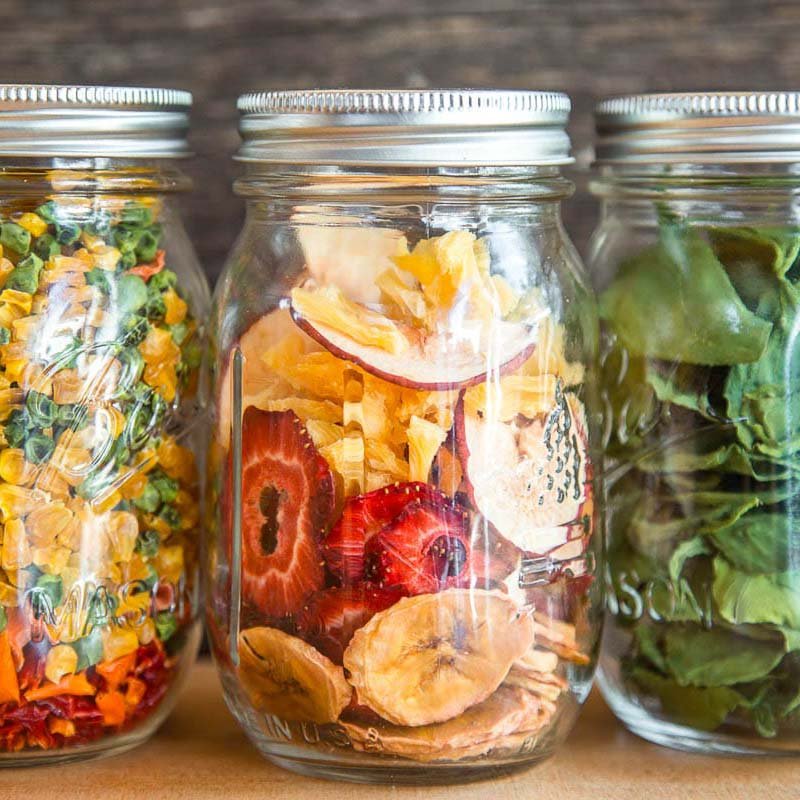
Everything you need to know to start dehydrating your own backpacking meals: the benefits of dehydrating food, what ingredients dehydrate the best, proper food handling procedures, the best way to store dehydrated food, and much more!
Dehydrating has completely changed the way we approach food in the backcountry. It has opened up an entirely new world of meal options and has reduced our price per meal. It is also a lot of fun and pretty easy to learn.
If you’re interested in getting into food dehydrating or want to expand your knowledge about the process, then this guide is for you! We will walk you through everything so you can start dehydrating and storing meals for your next backpacking trip.
Why dehydrate food For backpacking
Diversify Your Meal Options: There are only so many store-bought backpacking meal options available, and not all of them sound very tasty. You can expand your backpacking menu by making your own meals.
Control Nutritional Profile: Everyone has different nutritional needs. Dehydrating your own backpacking meals allows you to control the final product. Less salt? More protein? Gluten-free? You decide!
Lower Cost: Relying exclusively on store-bought backpacking meals can cost a small fortune. Over time, dehydrating your own meals allows you to dramatically reduce the cost per meal.
Faster Cooking Times: By preparing dehydrated food at home you need less time (and fuel) to rehydrate it in the field. This is particularly true for grains, legumes, and vegetables.
Preserve Perishables: Some foods would be impossible to safely bring backpacking without preserving them through dehydration, such as meat and fresh produce.
Weight and Space Savings: Dehydrating your food will dramatically reduce its weight while retaining its nutritional value. Plus, dehydrated food packs down to a fraction of its freeze-dried counterpart.
